

The personal Vault remains a preview while funded wallet flows are being
qualified. Follow the app’s current availability messages for deposits and
automatic management. Screenshots below use sample data and do not demonstrate
completed live transactions.
Open your Vault
Open Vault and check the Base account shown by the page. The strategy uses native USDC on Base Mainnet. Complete the wallet setup requested for your connected account, and verify the owner and funding address before approving a deposit.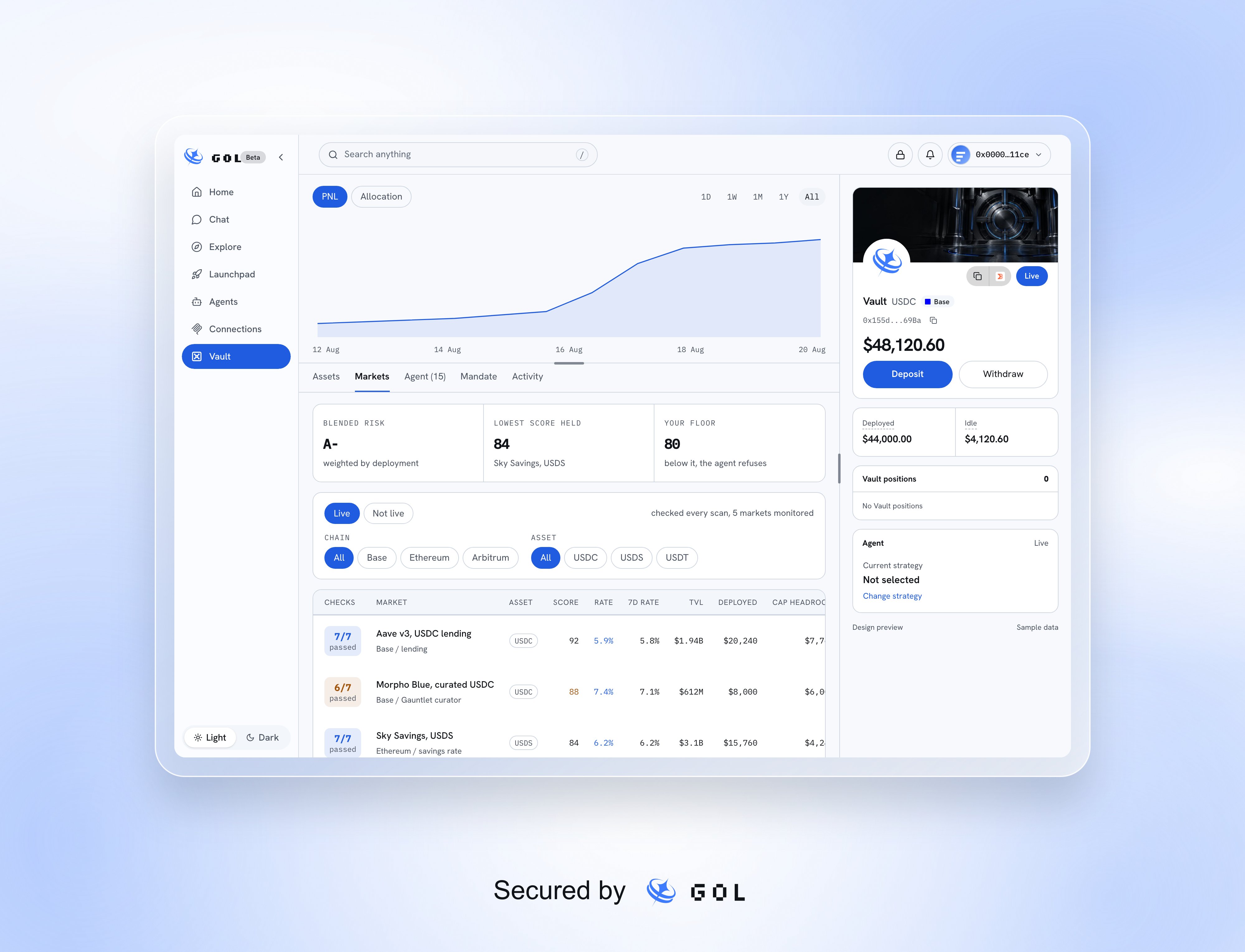
The personal Base Vault with sample balances, allocations, and owner controls.
How your USDC earns yield
When USDC is deposited into a lending vault, that protocol issues shares to your Safe. Those shares represent a claim on the vault’s assets. As borrowers pay interest, the value represented by each share can grow after the underlying protocol’s fees. Rates vary, and shares can also lose value. GOL manages which eligible vault holds your USDC. The underlying vault’s curator manages its lending-market allocations, including the collateral and market limits it accepts. Both layers matter when reviewing a position. Your Vault can contain invested positions and idle USDC. Moving funds between lending vaults changes the allocation; it does not create a new deposit or, by itself, generate profit.Which markets the Vault uses
The current strategy universe uses selected Morpho USDC lending vaults on Base, including vaults managed by curators such as Spark, Gauntlet, and Steakhouse. Each venue has its own collateral exposure, liquidity, fees, and governance. Discovery lets you inspect lending opportunities and their risk information. A market appearing in Discovery does not automatically make it an approved destination for your funds. It must also be supported by the execution path, permitted by your strategy, and pass the current market and transaction checks.
Discovery preview. No markets were returned in this mock capture.
Choose a strategy
Your strategy determines which markets the agent may consider. Every strategy remains subject to its own permissions and current checks.
These names describe permission and screening choices. They do not guarantee a particular return or level of principal protection. A broader strategy can still select the same market as a stricter one, and a delayed-withdrawal venue is available only when the app explicitly includes it.
How rebalancing decisions work
The agent compares your current allocation with other qualified destinations. It considers both recent rates and longer-term observations, along with how the proposed deposit could affect the destination’s rate. A temporarily high advertised rate is not enough to justify a move. Before moving, GOL evaluates whether the expected improvement covers transaction costs and the expected effects of entering and leaving the positions. It also checks that the amount fits your permissions and that the source and destination have enough usable liquidity. If the expected benefit is too small, the agent holds the current position. For vaults that support immediate redemption, a rebalance withdraws the source position and deposits the proceeds into the destination in one transaction. Both steps must succeed together. If a required step fails, the whole move is rolled back. Funds and newly issued shares stay with your Safe throughout the agent’s permitted flow. Automatic management does not require a new wallet approval for every rebalance while your approved authority remains valid. It does require an enabled service, sufficient transaction gas, fresh market information, and a transaction that passes its checks. A proposal or pending transaction is not a completed rebalance; use confirmed activity to follow the result.How markets and actions are screened
GOL checks several kinds of evidence before allocating:- Market history and activity: Is there enough usable history, and has the market seen recent interaction?
- Collateral and protocol exposure: What backs the underlying loans, who manages the vault, and how can its configuration change?
- Liquidity and position size: Can the proposed amount enter and leave without taking too much of the available capacity?
- Rates and prices: Do current observations make sense against the market’s history and the available price checks?
- Transaction safety: Does the exact action fit the approved account, venues, amount limits, expiry, and execution-loss allowance, and does simulation succeed?
Review the personal Vault
The Vault view brings together your balance, invested and idle funds, allocation, strategy, and agent activity. Review the underlying market details and confirmed transactions alongside the summary. Displayed APY is an estimate based on the stated observations, not the profit your account has already earned. Deposits and withdrawals also change your balance, so balance growth alone does not establish investment performance. Network fees are separate from the underlying vault’s fees. Provider or indexer problems can leave data unavailable or stale. Follow the page’s freshness and retry messages. If a submission is uncertain, check its existing transaction and wallet activity before trying again.Your permissions and control
Your approval sets the boundaries for automatic management, including the permitted venues, the amount the agent can move in an action, its expiry, and the supported execution-loss limits. The contracts enforce their stated restrictions, while market screening and operating controls provide additional checks in the service. Execution-loss limits constrain the supported actions. They do not cap every possible market loss, prevent a stablecoin depeg, or insure your original deposit. Review the exact terms shown for your account before approving them.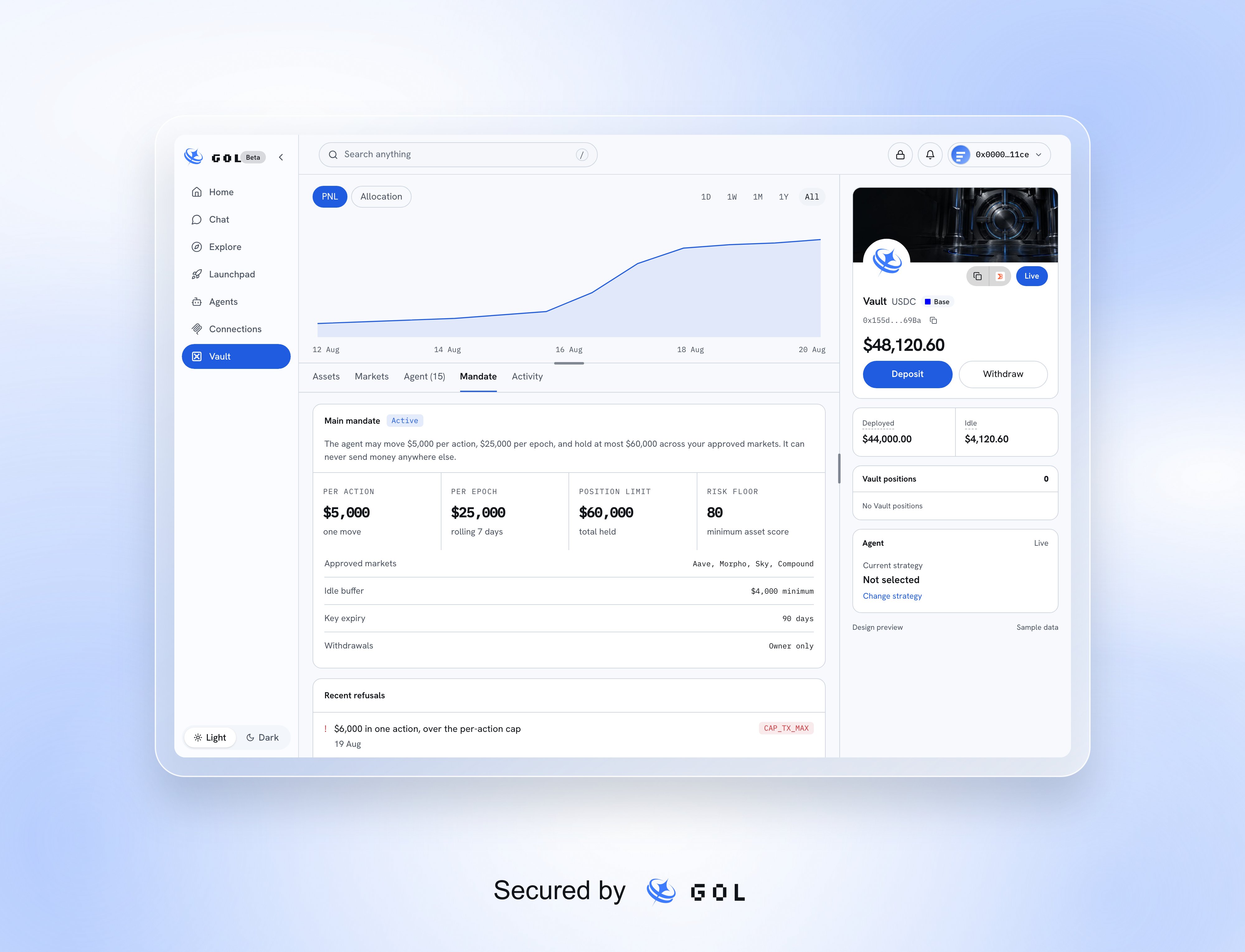
An illustrative permission panel. The terms you review and authorize determine your account's actual limits.